
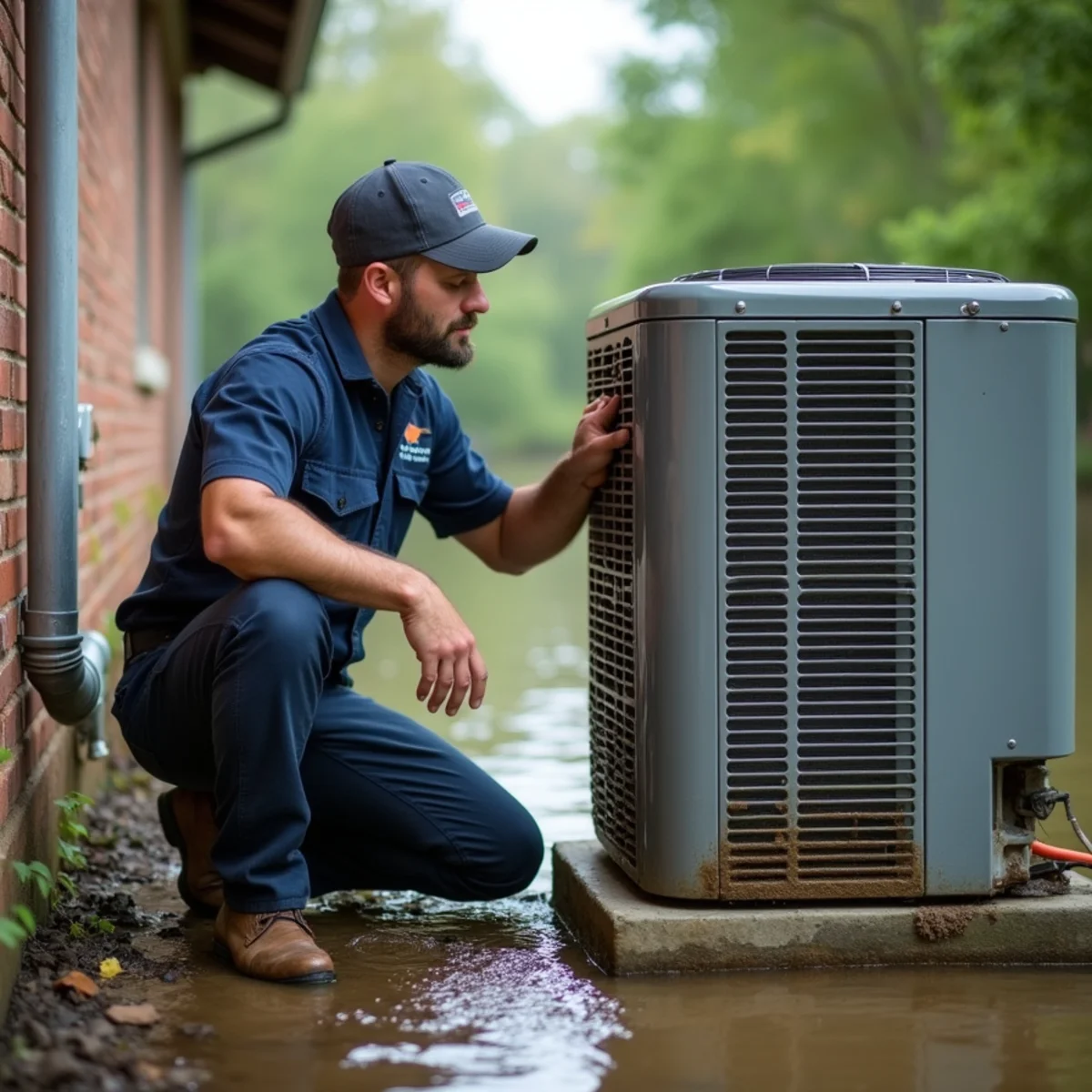
Direct Answer: Critical Electrical Safety Rules After Condenser Flooding
If floodwaters from the West Fork of the San Jacinto River, Lake Houston, or localized street drainage submerged your outdoor air conditioning condenser, DO NOT attempt to turn the system on at the thermostat or reset the outdoor breaker. Energizing an air conditioner that has been submerged introduces catastrophic arc-flash hazards, risks fatal electric shock, and instantly burns out compressor motor windings.
Floodwater is not clean rainwater; it carries corrosive salts, dissolved sewage, chemical runoff, and fine abrasive silt. When silt enters electrical contactor switches, dual-run capacitors, and fan motor bearings, it destroys insulation resistance. The system must be professionally decontaminated, metered, and cleared by a licensed HVAC technician before electrical power is restored.
The Kingwood & Humble Flood Reality: San Jacinto River and Lake Houston Vulnerabilities
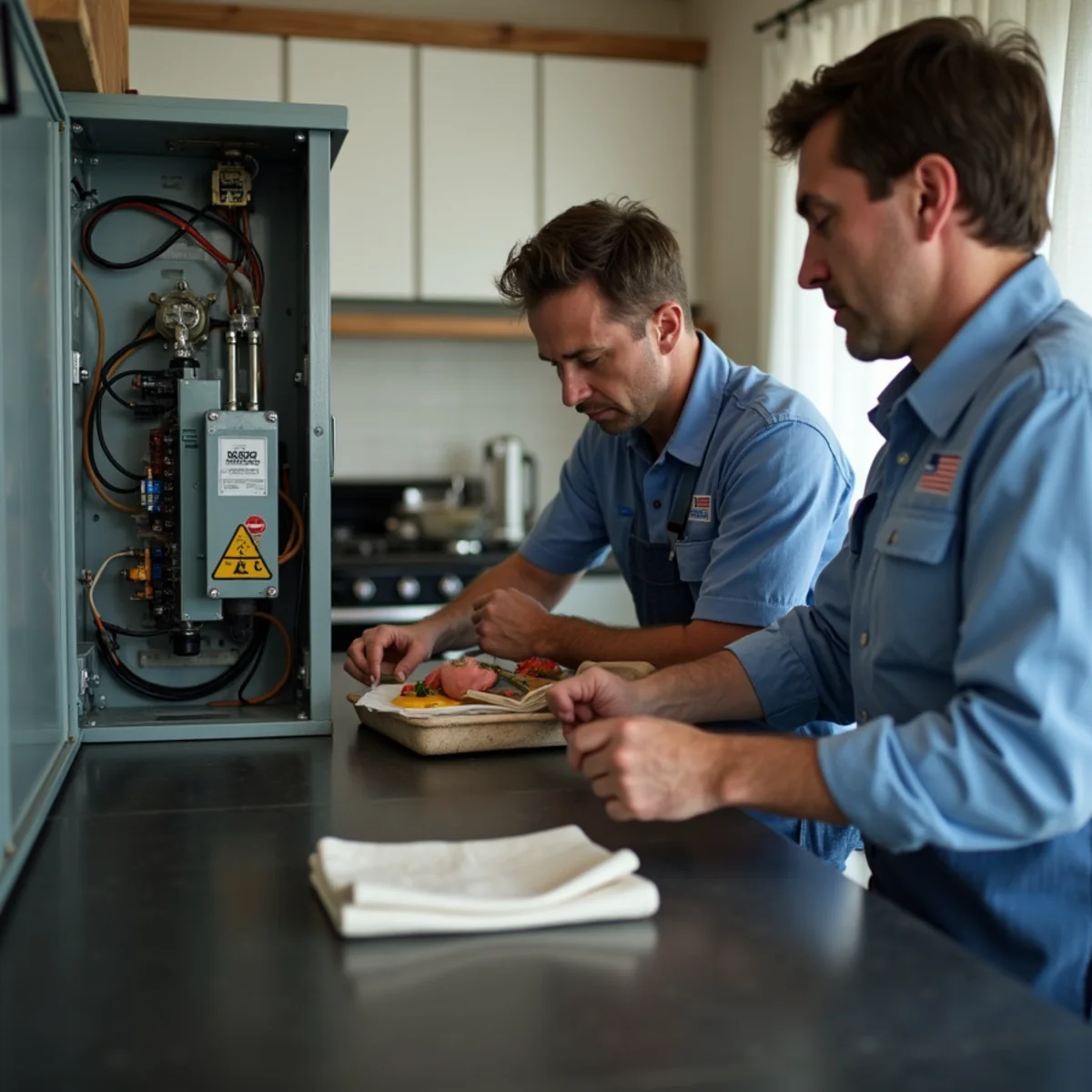
Homeowners throughout Kingwood neighborhoods like Bear Branch, Elm Grove, and River Grove, as well as low-lying subdivisions along FM 1960 and the San Jacinto River basin in Humble, understand the recurring risk of tropical storms and flash flooding. Events like Hurricane Harvey and Tropical Storm Imelda demonstrated how quickly outdoor mechanical equipment can be engulfed.
Ground-mounted AC condenser slabs are often only 4 to 8 inches above ground grade. Even when floodwaters recede quickly within a few hours, the water line inside the condenser cabinet leaves behind a thick coating of corrosive river mud across electrical terminals, reversing valves, and aluminum heat transfer fins.
What Happens When Silt and Murky Water Enter an Outdoor Condenser
The internal components of an outdoor condensing unit are designed to resist torrential falling rain, but they are not hermetically sealed against standing water immersion under hydrostatic pressure:
- •Sealed Motor Bearings: Condenser fan motors utilize sealed sleeve or ball bearings. Water pressure forces fine sand past the rubber seals, washing away lubricating grease and causing the motor to seize within minutes of restart.
- •High-Voltage Contactor and Relay Corrosion: Silt bridges the gap between 240-volt contactor terminals, causing immediate short circuits and fire hazards when the thermostat calls for cooling.
- •Compressor Terminal Pin Hermetic Destruction: The high-voltage electrical terminal block on the side of the compressor shell is protected by a rubber gasket. Flood immersion causes electrical tracking across the pins, blowing out the glass-to-metal hermetic seal and causing explosive refrigerant venting.
- •Aluminum Fin Corrosion and Airflow Blockage: River silt packs tightly between delicate condenser coil fins. As the mud bakes dry in the Texas sun, it creates a solid barrier that suffocates airflow, skyrocketing compressor head pressures.
The 6-Step HVAC Salvage and Decontamination Protocol
When our emergency flood response technicians arrive on site, they execute an exhaustive restoration protocol:
- •1. Complete High-Voltage Lockout/Tagout: Verifying zero voltage at the service disconnect box with calibrated test meters.
- •2. Cabinet Disassembly & Deep Pressure Decontamination: Removing fan grilles and outer louvered panels to chemically wash coils from the inside out using biodegradable foam cleaners.
- •3. Megohmmeter Winding Insulation Testing: Metering compressor motor windings to ground at 500 to 1,000 volts DC to verify insulation resistance exceeds 50 megohms.
- •4. Electrical Component Replacement: Systematically replacing compromised contactors, dual-run capacitors, hard-start kits, and disconnect switches with brand-new, sealed components.
- •5. Refrigeration Circuit Pressure & Moisture Check: Verifying that copper linesets and service valves remained hermetically sealed without floodwater ingress.
- •6. Controlled Recommissioning: Powering the unit under monitored amp draw, checking superheat, subcooling, and verifying safe temperature splits across the indoor coil.
Navigating Flood Insurance, FEMA Claims, and Elevating Units Above Base Flood Elevation (BFE)
If your system suffered total electrical submersion, flood insurance under the National Flood Insurance Program (NFIP) or private flood carriers typically covers equipment replacement. Our technicians provide detailed written mechanical failure reports, digital photos of submerged components, and AHRI-certified replacement bids formatted specifically for insurance adjusters.
To protect your new system from future high-water events, we offer elevated hurricane equipment stands. Mounting your outdoor condenser on heavy-duty aluminum or steel platforms 18 to 36 inches above local Base Flood Elevation ensures your home stays cool even during severe Southeast Texas weather. Call Hooten Air Pros at (321) 478-0693 for emergency post-flood inspections.
Have an Immediate Heating or AC Problem in Humble?
Capacitors, motors, coils, and drain lines serviced 24/7. Call (321) 478-0693.
Related Local Services & Coverage Areas
Questions Homeowners Ask About This Topic
Clear, straightforward answers about HVAC service, repairs, and pricing in Humble, TX.
Not Urgent? Send a Request
Schedule non-emergency repairs, seasonal tune-ups, or request an in-home replacement estimate.